Indoor vs outdoor sport climbing: How climbing walls, towers and rock faces differ – Part 2
Route setting on outdoor artificial walls
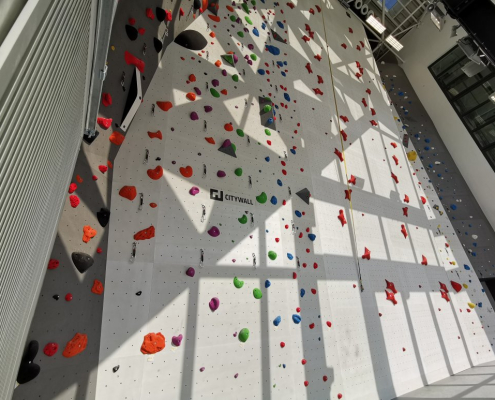
Route setting on outdoor artificial walls is different from indoor route setting. In a gym, routes can be reset frequently because staff, equipment and controlled working conditions are available. On an outdoor tower, resetting may be less frequent and more dependent on weather, access equipment and maintenance schedules.
Outdoor visibility also matters. Routes may need clearer hold colors or more durable marking systems because sunlight, dirt and fading can make lines harder to identify. Holds exposed to UV and weather may age differently from indoor holds.
The height and structure of outdoor towers can also influence route setting. Many towers are built for lead climbing, top-rope climbing or group instruction. Some are designed with multiple faces, allowing different wall angles and difficulty levels on one freestanding structure. Others are simpler training walls intended for schools, camps or recreational facilities.
Unlike natural rock, outdoor artificial walls still allow deliberate route design. However, unlike indoor gyms, the setting environment is less controlled and the wall must be managed as an outdoor structure.
See you there!
Natural rock walls: shaped by geology, not design
Natural rock walls are completely different from artificial walls. A natural crag is not designed for climbing. The rock type, angle, texture, cracks, pockets, edges, tufas, slabs and overhangs are formed by geological processes.
Sport climbing on natural rock uses fixed bolts and anchors, but the movement comes from the rock itself. The route follows what the wall offers. Some routes are obvious and direct. Others are subtle, technical or difficult to read.
Natural rock is also much less predictable than artificial walls. A hold may look good from the ground but feel poor when reached. A foothold may be tiny, polished or hidden. A rest position may depend on body position and balance rather than a visible jug. Texture, friction and conditions can change dramatically with sun, shade, humidity, rain or temperature.
Different rock types create different climbing styles. Limestone often offers pockets, tufas and steep endurance routes. Granite may require cracks, friction and precise footwork. Sandstone can provide slopers, edges and delicate movement, but may also be more fragile. Volcanic rock, conglomerate and other formations each have their own character.
The wall is not a neutral surface outdoors. It defines the route.