How sport climbing won over the German Alpine Club, one section at a time – Part I
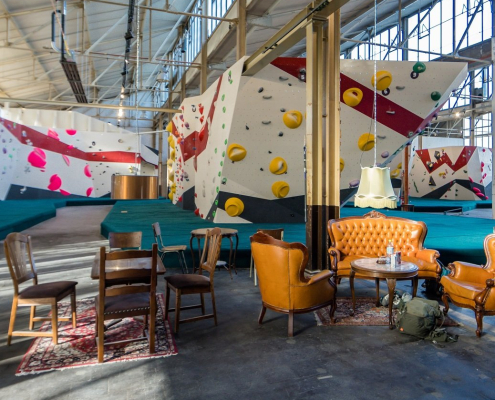
If you want to understand why sport climbing became so popular inside the German Alpine Club (DAV), don’t start with a heroic first ascent. Start with something much less romantic and far more influential: a door that opens at 6 p.m., a set of plastic holds, and the promise that you can train in February without negotiating snow, daylight, or a five-hour drive.
Because that’s the quiet revolution: sport climbing gave the DAV something it historically struggled to offer at scale—a reliable, local, year-round sport. And once sections learned that lesson, the rest followed with almost mathematical inevitability.
From niche to mass sport: the numbers tell the story
The DAV’s own background data is blunt: Germany’s climbing scene grew dramatically over the past 30 years—from an estimated 70,000 active climbers in 1990 to more than 1 million in 2023.
That growth didn’t happen primarily on sunny limestone. It happened indoors.
In 1990, Germany had about 20 climbing facilities over 100 m²; by 2000 it was 150, by 2010 290, and by October 2023 566. And the DAV is not a side character here: the same data points to 221 DAV halls among those 566 facilities.
So when you ask “how did sport climbing become popular among DAV members and sections,” a big piece of the answer is: sections built the infrastructure that made the sport easy to join, easy to repeat, and socially sticky.
The hall revolution: sections built a “third place” in the vertical
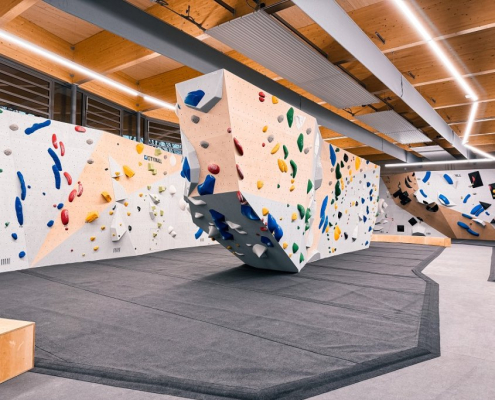
Sport climbing’s rise inside the DAV is inseparable from the rise of DAV-operated climbing facilities. Today, the DAV reports 220 climbing facilities with around 200,000 m² of climbing (including bouldering) surface, alongside a membership total of 1,570,602 (as of 31 Dec 2024) and 355 sections nationwide. That matters because it changes what a section is. A section stops being only a calendar of tours and a hut key. It becomes a place you can drop into after work, meet friends, train, take a course, bring your kid, grab a coffee—and repeat next week.
The DAV’s own hall survey write-up describes the long arc clearly: artificial facilities have been increasing since the late 1980s, with a noticeable acceleration after the turn of the millennium, and the DAV explicitly frames these centres as “wohnortnaher Bergsport” (mountain sport close to home). Sport climbing didn’t become popular despite the DAV’s structure. It became popular because the section model is perfect for building community around a consistent training space.
The “gateway sport” effect: most people start indoors now
Here’s the key cultural shift: the classic path used to be “mountains → rock → maybe training.” Now, for many, it’s the reverse. The DAV’s figures stress that nearly all active climbers and boulderers use indoor facilities, and it estimates that around 70% of roped climbers also climb outdoors (but only about 30% of boulderers do).
That’s not just trivia—it explains why sport climbing became a membership engine for many sections. Indoor climbing is an on-ramp: it lowers entry barriers (weather, logistics, mentorship access), creates frequent contact with the club, and turns “I tried it once” into “this is my weekly routine.”
A club-wide playbook: rules, funding, and professionalization
Once sections started operating climbing centres, the DAV did what federated organizations do best: it built a framework so the boom didn’t become chaos. The DAV’s guidance on planning and operating climbing halls makes two points that shaped sport climbing’s adoption:
- The DAV supports sections financially with grants and low-interest loans for building artificial climbing facilities.
- Sections operating facilities commit to a shared “order” for artificial climbing systems—things like discounted entry for DAV members, making the facility available for competitions, consistent naming/branding, and access conditions including reduced entry for people with disabilities and free training for squad athletes.
This is where sport climbing stops being “that modern thing some people do” and becomes a supported, standardized pillar of the club—complete with training pathways, marketing support, and an operational knowledge base. And yes: this is also where the DAV quietly becomes a sophisticated provider of urban sports infrastructure, while still talking like a mountain club. Both are true.